Photonic
Compute-in-Transit
for AI
We embed photonic compute capability within the optical data path for greater efficiency & scalability
AI infrastructure has hit the data movement wall. Data travels quickly through optical links, but still has to be converted, routed and processed in separate electronic stages adding energy, latency and complexity.
Optalysys changes that model.
Our programmable silicon photonic technology enables Compute-in-Transit: operations performed with light directly in the data path, overcoming copper-electronic limits and creating new compute capability where data already moves.
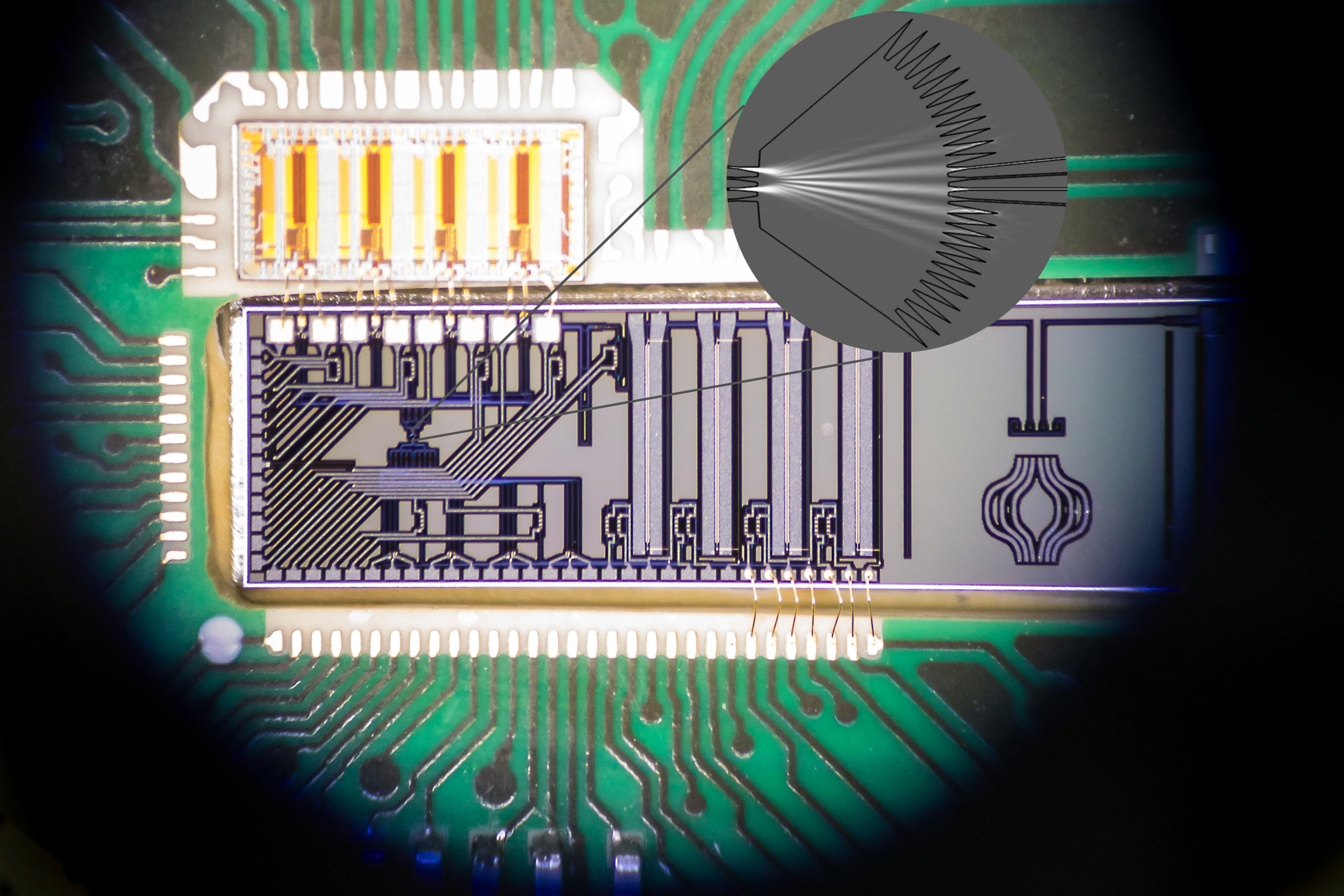
New levels of energy efficiency for AI
For infrastructure teams facing power, cooling and bandwidth constraints, Compute-in-Transit extracts more useful work from data already moving through the system, without a power penalty.
More work from every transmitted bit
Native 384 GOPS / lambda @ 32GSps (GF45nm)
Zero energy computation using 2.76pJ/bit transport budget
Scalable accuracy
e.g. FP4->FP64
Operations
that
matter
FFT · NTT · MAC ·
modular arithmetic
Programmable
floating-point,
integer and modular operations
performed
directly in the
data path
Proven photonics maturity
Deterministic output
Thermal stability
Feedback and calibration monitoring/interrupt
recovery
Silicon proven through multiple tapeouts
Designed
for compatibility
Standard interfaces and protocols: CXL / PCIe; QSFP56, NRZ, PAM4
Developer-accessible C++ environment
Roadmap to
112GSps -> 1.3TOPS / core / lambda
Designed for data movement-bound infrastructure
Distributed AI workloads
Support operations around movement, synchronisation and reduction
Hyperscale AI infrastructure
Explore new photonic compute capability within existing data paths
Optical interconnect ecosystems
Make optical data movement efficient, programmable and computationally useful
Secure &
confidential AI
A path to more efficient protected computation for your most sensitive data
Start evaluating Compute-in-Transit
Explore Optalysys technology on a physical photonic computing platform.
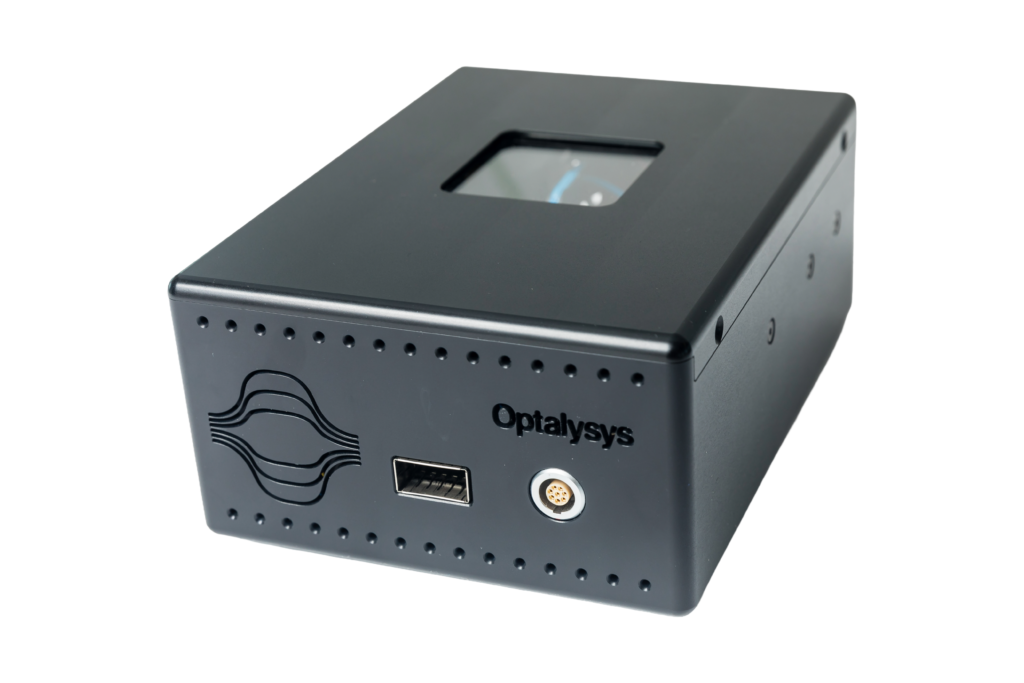
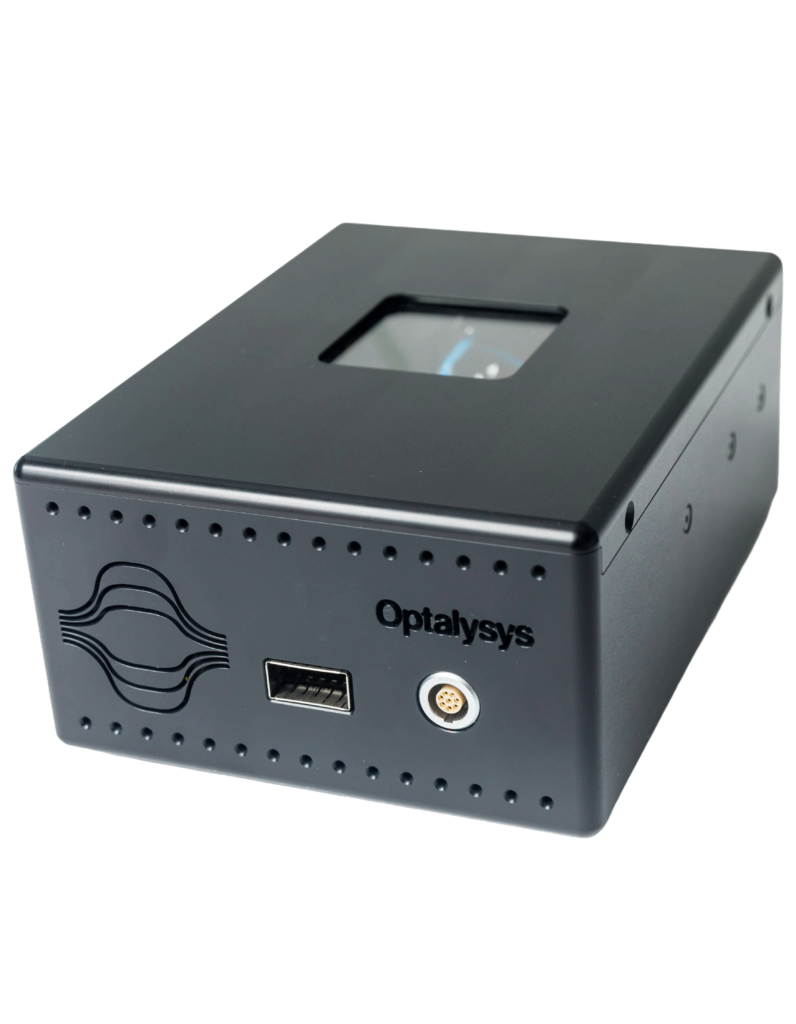
Our evaluation kit combines a photonic compute module, AMD Alveo V80 accelerator, QSFP data path, control software and developer tools to give your team a practical environment to run supported operations, test integration pathways and begin building applications.
With guided onboarding and direct technical support from Optalysys, you can move from initial exploration to building, experimenting and a evaluating photonic Compute-in-Transit within your own architecture.
Built to address the biggest issues facing next-gen workloads
Designed around a 32 GSps serial data path, supporting 16-, 32- and 64-bit transfers per digital cycle.
Photonic Compute-in-Transit is built in the language of data movement: line rates, precision, serial transfer and receiver-side integration.
Estimated 2.76 pJ/bit link energy on 45nm silicon photonics, excluding laser.
Optalysys is designed to add compute capability while staying aligned with the energy constraints of AI data centres.
Structured operations such as reductions and transforms can be slowed by repeated movement, conversion and processing stages. Compute-in-Transit provides a route to lower equivalent-cycle latency for suitable data movement-bound workloads.
Our hybrid photonic-electronic architecture is designed around deterministic output, calibration, signal integrity, standard interfaces and developer-accessible software – supporting practical integration rather than requiring a wholesale stack rethink.